.jpg)
Welcome to the Behavioural Science Toolkit — a resource developed with the support of RiskWi$e, an initiative funded by the Grains Research and Development Corporation (GRDC) and the Australian Research Council Training Centre for Behavioural Insights in Technology Adoption (ARC-BITA).
RiskWi$e is the National Risk Management Initiative aimed at equipping the grains industry with improved strategies and resources for understanding and managing risk. By combining the latest research with industry expertise, the program aims to deliver practical solutions that support long-term resilience and profitability for grain growers across Australia. RiskWi$e is led by CSIRO and is made possible thanks to the involvement of all partners. It incorporates behavioural science across all themes and activities, supported by UWA.
This toolkit is specifically designed to provide practical, research-backed tools and behavioural insights to help growers, advisers, researchers, and industry professionals make better decisions in the face of risk and uncertainty.
What is behavioural science?
Behavioural science is the study of human behaviour to understand how and why people make decisions. It is particularly useful for developing effective interventions for behaviour change.
Behavioural economics focusses on how psychological biases and mental shortcuts influence decision-making under uncertainty. It recognizes that people may deviate from purely rational decision-making.
Read a short blog about 6 behavioural economics concepts that might affect your farm management decisions.
For a more in-depth exploration of behavioural science, read our report on Key behavioural science concepts applied to farmer decision making and farm risk management.


Risk and behavioural science
Pannell Discussions released a Risk in Australian grain farming series of 17 easy-to-read discussions, explanations and examples on risk and behavioural science written for the Australian grains industry.
Pannell Discussions include:
Download the brochure for the full range of articles by UWA's Professor David Pannell.

How do we make decisions?
Can a structured process to decision making reduce the effect of biases? This blog post describes seven steps to more effective decision making:
1. Identify the decision
2. Identify the possible outcomes
3. Identify your preferences
4. Estimate likelihoods for each scenario
5. Choose from the alternatives
6. Take action
7. Review your decision and its consequences
When the stakes are high, having a clear process will help to make decisions that are ‘more right, more often’.

Behavioural science helps clarify the risks and rewards of decision making
We contribute to industry dialogue and understanding of how human behaviour can help clarify the risks and rewards growers face, and ultimately support more confident, informed decisions.
Our articles aim to raise awareness of how behavioural science can be used to improve decision making in grain growing contexts.

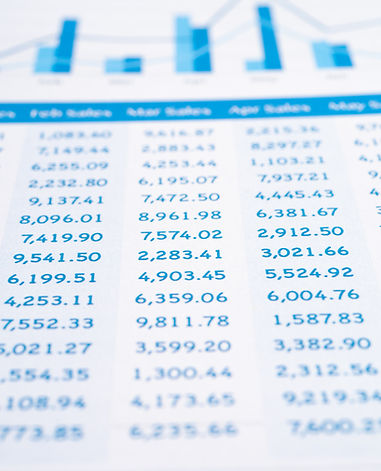
Forecasting post-harvest grain prices
Knowing when to sell or store grain is no easy task. We are investigating how well we can forecast post-harvest grain prices and what that means for decision-making.
The research is showing that while grain prices are fundamentally unpredictable, understanding price risk can still help farmers make more informed choices about crop selection, storage, and marketing.
We demonstrate how a simple statistical model can help measure trends and volatility in the market.
Decision Support Tools
The RiskWi$e Decision Support Tools database is a collation of over 60 various tools available to Australian grain farmers for farm, business, and price risk management and decision-making.
Work is in progress to evaluate each tool's approach to capturing and presenting risk.

Rules of Thumb or Heuristics
Biases or heuristics can cloud our decision making. Heuristics, or 'rules of thumb', are simplified mental rules that help with decision making.
We often form these rules based on experience, advisors' input, or intuition. Rules of thumb may be rational but can become problematic if biased.
The RiskWi$e program is investigating what decision rules farmers use, and whether any of those rules should be revisited.

RiskWi$e Presentations
Behavioural Science Update 2025/26 (Kragt, M. 2025)
Communicating risk (Pannell, D. 2025)
Blog: Depicting risk in graphs for farmers (Pannell, D. 2025)
Risk and Decision making in Agriculture (Pannell, D. 2024).
Applying Behavioural Science to improve Risk management for sustained profitability (Rola-Rubzen, F. 2023).
What do we know about risk and agricultural decision making (Pannel, D. 2023)

Recommended reading
Kahneman, D. (2011). Thinking, Fast and Slow, Farrar, Straus and Giroux, New York.
Wuepper et al. (2023). Behavioral agricultural economics. Applied Economic Perspectives and Policy. 45 (4), pp. 2094 - 2105.
Holohan, C. (2020). The Discussion Group Facilitator's Handbook. Teagasc – the Agriculture and Food Development Authority, Ireland.
Kragt, M., Sarmiento, J., & Rola-Rubzen, F. (2025). Key behavioural science concepts applied to farmer decision making and farm risk management. AgEcon.

Design frameworks
The Australian Government has compiled these guides and frameworks for applying behavioural insights for policy and behaviour change: